
The Power and Essence of Guidelines
At the heart of every meaningful relationship lies a fundamental question: What do you need to feel safe enough to be vulnerable?
Whether in a therapy group, a committed partnership, a family system, or even the relationship we have with ourselves, emotional safety is the foundation upon which trust, honesty, and connection are built. Without safety, people tend to protect, defend, withdraw, or react. With safety, they become more willing to share, listen, and engage authentically.
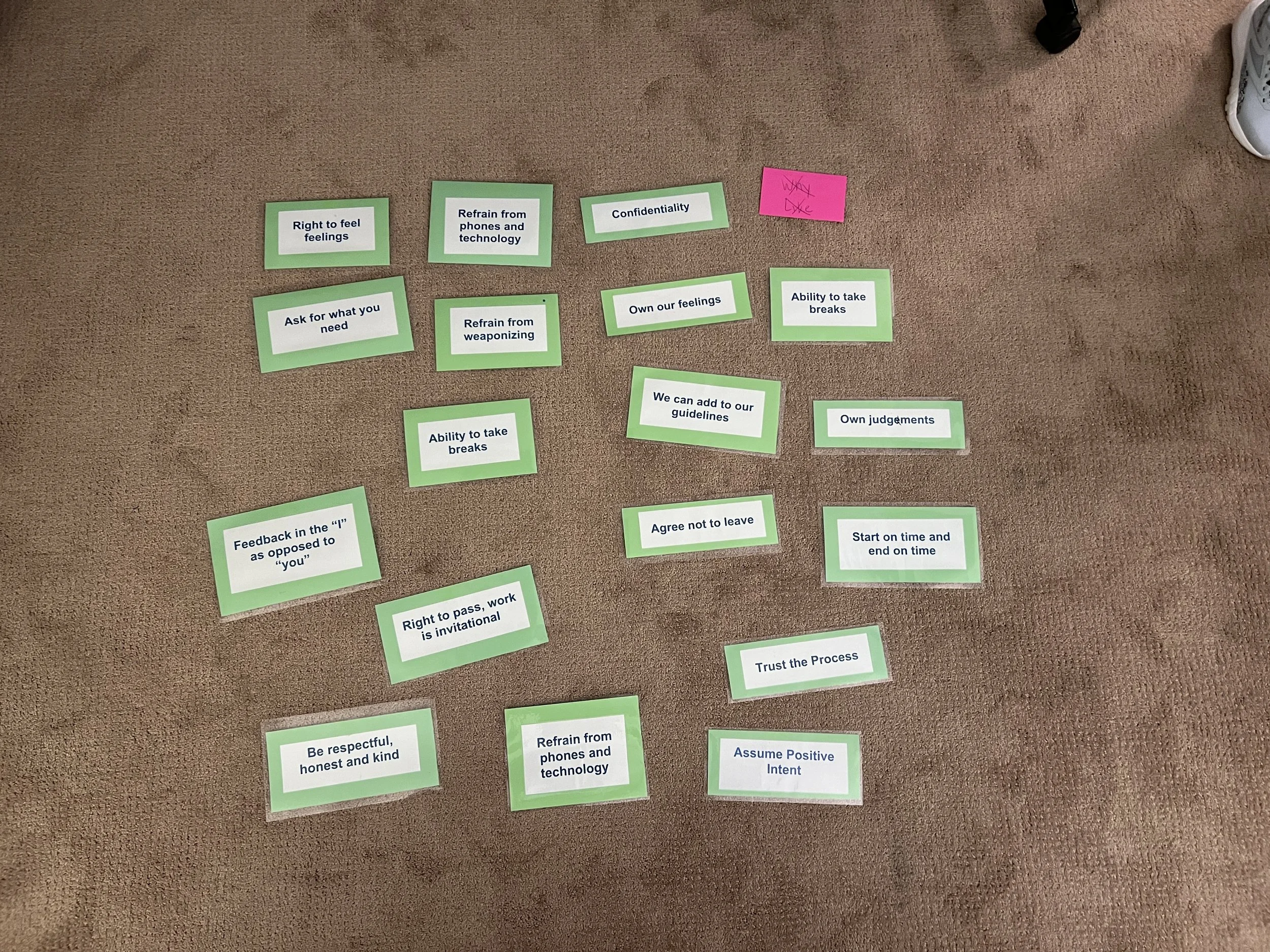
Creating emotional safety does not happen by accident. It requires intentional agreements and guidelines that support respect, accountability, and trust. Some of the most important that inform how we can improve our communication include:
• Confidentiality
• Trusting the process
• Speaking in the “I” rather than the “you”
• Refrain from asking “Why” or “When”
*Refrain from using the word “Like”
*Being respectful, honest, and kind
• Owning one’s feelings
• Owning one’s judgments
• Refraining from phones and technology during connection-focused conversations
• Refraining from weaponizing information shared in vulnerability
• Starting and ending on time
• Honoring the right to pass
*We can add to the guidelines
*Learn to take breaks
*Agree not to leave
These guidelines are more than rules; they are pathways to connection. They create a structure that allows individuals to slow down and become more intentional in their interactions. Instead of reacting impulsively, people have an opportunity to respond thoughtfully. Instead of becoming defensive, they can speak honestly about their experiences, needs, and emotions.
When I was first exposed to these guidelines, I didn’t think they were very useful. My tendency was to hurry, fix, solve and over function. I had no idea that I was adding to my own disconnect from the people I wanted to be close to. I thought I was exempt from the idea of emotional safety and therefore had no clue how unsafe I was with others. Here’s an example: To the guideline refrain from asking why, When I refrain from asking a “Why” question, “Why were you late?” And instead, try to identify the “I” in my experience, I’m forced to slow down, and examine what is happening for me. “When you were late, I felt irritated, then scared, and moved right to disrespected. And, that the dinner is ruined…” this is much more truthful then asking “Why were you late?” Often when I ask, “Why were you late?” I don’t really want to know the answer, and when I use the word “Why” I’m usually met with defense.
Connection is not created through perfect communication. It is created through safe communication. When emotional safety is established, trust grows. When trust grows, vulnerability becomes possible. And when vulnerability is present, deeper relationships—with others and within ourselves—can flourish.
If this is connecting for you and you would like to talk to someone about the pathway to deeper connection, please reach out.
Most Sincerely,
Sheila